


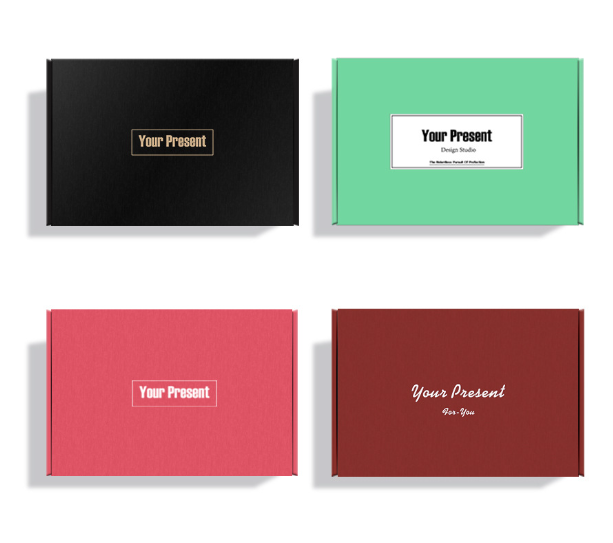
Carton is a common packaging container that is widely used in logistics, warehousing, retail and other fields. So, the editor of Dongguan carton processing factory will take you to understand the production process of carton processing and production, which generally includes the following main steps:
devise
Design the size, structure and printing pattern of the carton according to the size, weight, shape and transportation and storage requirements of the product. Common carton structures include slotted cartons, sleeved cartons, folding cartons, etc. Factors such as the strength, stability and ease of processing of the carton should be considered when designing.
Base paper procurement and inspection
Procurement: Choose the appropriate base paper according to the performance requirements of the carton, such as kraft paper, corrugated paper, containerboard paper, etc. The quality of the base paper directly affects the strength and quality of the carton, and it is necessary to pay attention to the gram weight, ring compression strength, bursting strength and other indicators of the base paper.
Inspection: After the arrival of the base paper, strict inspection should be carried out to check whether the appearance is damaged, stained, wrinkled and other problems, and the physical properties should be tested to ensure that it meets the production requirements.
Corrugated cardboard production
Cardboard lamination: Tissue paper, lining paper and corrugated paper are laminated by a laminator. First, the corrugated paper is processed on the corrugated machine into corrugated paper with a certain shape and height, and then bonded together with the face paper and lining paper respectively through glue to form corrugated cardboard. In this process, the amount, temperature and pressure of glue should be controlled to ensure that the cardboard bond is firm and flat.
Cardboard processing: According to the design size of the carton, the corrugated cardboard is cut into the desired length and width using a slitting machine. For some cartons with special requirements, such as those with slotting, punching, crimping and other processes, they are also completed at this stage.
printing
According to the designed pattern and text, printing equipment is used to print on the surface of the carton. Common printing methods include flexographic printing, offset printing, screen printing, etc. Flexographic printing has the advantages of low cost, high efficiency and environmental protection, and is suitable for most carton printing; The printing accuracy of offset printing is high, the color is bright, and it is suitable for cartons with high requirements for printing quality; Silk screen printing is often used to print some special effects, such as fluorescent inks, three-dimensional patterns, etc. During the printing process, it is necessary to pay attention to the deployment of ink, printing pressure and registration accuracy to ensure that the printing pattern is clear and the color is accurate.
Die-cutting
Use a die-cutting machine to die-cut the printed corrugated cardboard according to the designed shape and size to form the individual parts of the carton. The accuracy and quality of the die-cutting tool are crucial to the forming effect of the carton, and the tool should be checked and replaced regularly to ensure that the die-cutting edge is neat and free of burrs. For some complex shapes of cartons, advanced technologies such as laser die-cutting may be required to improve die-cutting accuracy and efficiency.
molding
The die-cut carton parts are molded by a nailing or gluing machine. The nail box is to use iron nails to fix the interface of the carton together, which has the advantage of being firmly connected and suitable for heavy-duty cartons; The glue box is used to glue the interface together, which has a beautiful appearance and good sealing, but has high requirements for the performance of the glue. In the forming process, it is necessary to ensure that the size of the carton is accurate, the interface is firm, and the shape is regular.
Quality inspection
Carry out a comprehensive quality inspection of the formed carton, including visual inspection, such as whether the printing pattern is clear, whether the color is consistent, whether the surface of the carton is damaged, stains, etc.; Dimensional measurement to ensure that the length, width and height of the carton meet the design requirements; Strength test, such as compressive strength, burst strength, etc., to ensure that the carton can withstand a certain pressure during transportation and storage. For unqualified cartons, it is necessary to enter in time
Hi, this is a comment.
To get started with moderating, editing, and deleting comments, please visit the Comments screen in the dashboard.
Commenter avatars come from Gravatar.